Home / Self Finance Courses / BFM / T. Y. BFM / Semester - VI / Elective / Organisational Behaviour

Organisational Behaviour

(0 customer reviews)
165.00

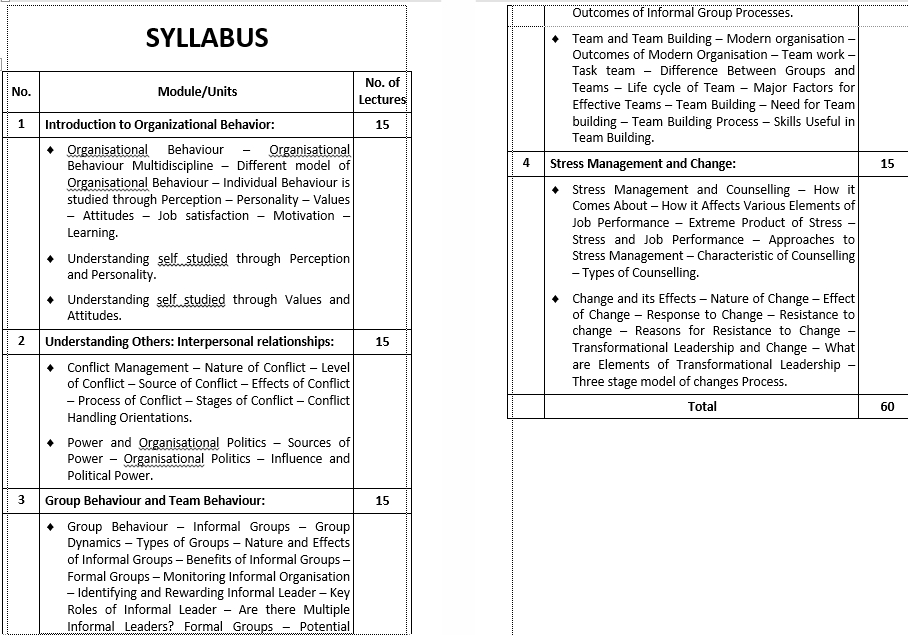
SYLLABUS

  (1)     Introduction to Organizational Behavior:
  • Organisational Behaviour – Organisational Behaviour Multidiscipline – Different model of Organisational Behaviour – Individual Behaviour is studied through Perception – Personality – Values – Attitudes – Job satisfaction – Motivation – Learning.
  • Understanding self studied through Perception and Personality.
  • Understanding self studied through Values and Attitudes.
  (2)     Understanding Others: Interpersonal relationships:
  • Conflict Management – Nature of Conflict – Level of Conflict – Source of Conflict – Effects of Conflict – Process of Conflict – Stages of Conflict – Conflict Handling Orientations.
  • Power and Organisational Politics – Sources of Power – Organisational Politics – Influence and Political Power.
  (3)     Group Behaviour and Team Behaviour:
  • Group Behaviour – Informal Groups – Group Dynamics – Types of Groups – Nature and Effects of Informal Groups – Benefits of Informal Groups – Formal Groups – Monitoring Informal Organisation – Identifying and Rewarding Informal Leader – Key Roles of Informal Leader – Are there Multiple Informal Leaders? Formal Groups – Potential Outcomes of Informal Group Processes.
  • Team and Team Building – Modern organisation – Outcomes of Modern Organisation – Team work – Task team – Difference Between Groups and Teams – Life cycle of Team – Major Factors for Effective Teams – Team Building – Need for Team building – Team Building Process – Skills Useful in Team Building.
  (4)     Stress Management and Change:
  • Stress Management and Counselling – How it Comes About – How it Affects Various Elements of Job Performance – Extreme Product of Stress – Stress and Job Performance – Approaches to Stress Management – Characteristic of Counselling – Types of Counselling.
  • Change and its Effects – Nature of Change – Effect of Change – Response to Change – Resistance to change – Reasons for Resistance to Change – Transformational Leadership and Change – What are Elements of Transformational Leadership –  Three stage model of changes Process.
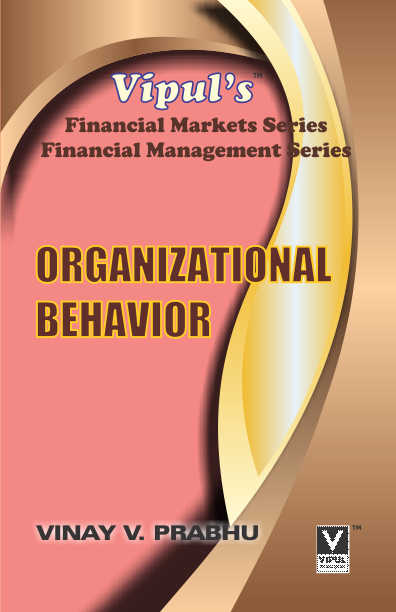
 

TYBFM — SEMESTER – VI

Author: Vinay Prabhu

FIFTH REVISED EDITION 2025

Description

SYLLABUS


(1)     Introduction to Organizational Behavior:

  • Organisational Behaviour – Organisational Behaviour Multidiscipline – Different model of Organisational Behaviour – Individual Behaviour is studied through Perception – Personality – Values – Attitudes – Job satisfaction – Motivation – Learning.
  • Understanding self studied through Perception and Personality.
  • Understanding self studied through Values and Attitudes.


(2)     Understanding Others: Interpersonal relationships:

  • Conflict Management – Nature of Conflict – Level of Conflict – Source of Conflict – Effects of Conflict – Process of Conflict – Stages of Conflict – Conflict Handling Orientations.
  • Power and Organisational Politics – Sources of Power – Organisational Politics – Influence and Political Power.


(3)     Group Behaviour and Team Behaviour:

  • Group Behaviour – Informal Groups – Group Dynamics – Types of Groups – Nature and Effects of Informal Groups – Benefits of Informal Groups – Formal Groups – Monitoring Informal Organisation – Identifying and Rewarding Informal Leader – Key Roles of Informal Leader – Are there Multiple Informal Leaders? Formal Groups – Potential Outcomes of Informal Group Processes.
  • Team and Team Building – Modern organisation – Outcomes of Modern Organisation – Team work – Task team – Difference Between Groups and Teams – Life cycle of Team – Major Factors for Effective Teams – Team Building – Need for Team building – Team Building Process – Skills Useful in Team Building.


(4)     Stress Management and Change:

  • Stress Management and Counselling – How it Comes About – How it Affects Various Elements of Job Performance – Extreme Product of Stress – Stress and Job Performance – Approaches to Stress Management – Characteristic of Counselling – Types of Counselling.
  • Change and its Effects – Nature of Change – Effect of Change – Response to Change – Resistance to change – Reasons for Resistance to Change – Transformational Leadership and Change – What are Elements of Transformational Leadership –  Three stage model of changes Process.
 

Narayan Niwas, 161,
Jagannath Shankar Seth Road,
Girgaum, Mumbai 400 004. Maharashtra, INDIA.

Useful Links

About Us

Our Distributors

Invitation to Authors

Contact Us

Need Help

Monday – Saturday: 10:30AM to 07:00PM

info@vipulprakashan.com

© Copyright 2025 Vipul Prakashan – All Rights Reserved – Powered by MTech