Home / Self Finance Courses / BFM / T. Y. BFM / Semester - VI / Elective / Corporate Restructuring

Corporate Restructuring

(0 customer reviews)
150.00

SYLLABUS

  (1)    Introduction and Concepts:
  • Meaning of Corporate Restructuring.
  • Need, Scope and Modes of Restructuring
  • Historical Background.
  • Emerging Trends.
  • Planning, Formulation and Execution of Various Corporate Restructuring Strategies - Mergers, Acquisitions, Takeovers, Disinvestments and Strategic Alliances, Demerger and Hiving off.
  • Expanding Role of Professionals.
  (2)    Merger and  Amalgamation, Corporate Demerger and Reverse Merger:
  • Introduction to Merger and Amalgamation, Corporate Demerger and Reverse Merger.
  • Legal, Procedural, Economic, Accounting, Taxation and Financial Aspects of Mergers and Amalgamations including Stamp Duty and Allied Matters.
  • Interest of Small Investors.
  • Merger Aspects under Competition Law.
  • Cross Border Acquisition and Merger.
  • Concept of Demerger; Modes of Demerger - by Agreement, under Scheme of Arrangement.
  • Demerger and Voluntary Winding Up.
  • Legal and Procedural Aspects; Tax Aspects and Reliefs.
  • Reverse Mergers – Procedural Aspects and Tax Implications.
  • Meaning and Concept of Takeover.
  • Types of Takeovers; Legal Aspects – SEBI Takeover Regulations.
  • Disclosure and Open Offer Requirements.
  • Bail Out Takeovers and Takeover of Sick Units.
  • Takeover Defenses.
  • Cross Border Takeovers.
  (3)    Funding of Merger and Takeover and Financial Restructuring:
  • Financial Alternatives; Merits and Demerits.
  • Funding through various Types of Financial Instruments including Equity and Preference Shares, Debentures, Securities with Differential Rights, Swaps, Stock Options; ECBs, Funding through Financial Institutions and Banks.
  • Rehabilitation Finance.
  • Management Buyouts / Leveraged Buyouts.
  • Reduction of Capital.
  • Reorganization of Share Capital.
  • Buy-Back of Shares – Concept and Necessity.
  • Procedure for Buy-Back of Shares by Listed and Unlisted Companies.
  (4)    Post-Merger Reorganization:
  • Factors involved in Post-Merger Reorganization.
  • Integration of Businesses and Operations.
  • Assessing Accomplishment of Post-Merger Objectives; Measuring Post Merger Efficiency.
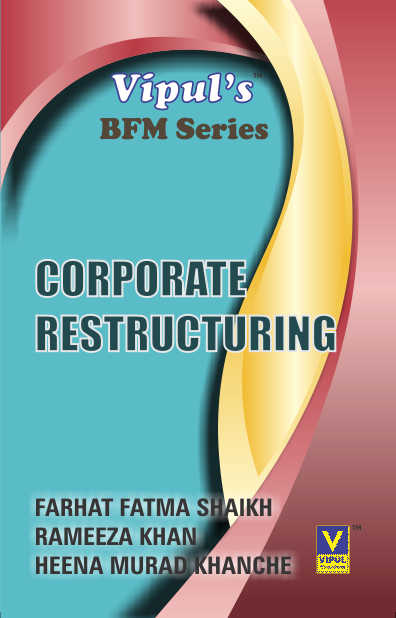
TYBFM — SEMESTER – VI

Author: Rameeza Sartaj Ahmed Khan

                Heena Murad Khanche

                Farhat Fatma Shaikh

FOURTH EDITION 2023

Description

SYLLABUS


(1)    Introduction and Concepts:

  • Meaning of Corporate Restructuring.
  • Need, Scope and Modes of Restructuring
  • Historical Background.
  • Emerging Trends.
  • Planning, Formulation and Execution of Various Corporate Restructuring Strategies – Mergers, Acquisitions, Takeovers, Disinvestments and Strategic Alliances, Demerger and Hiving off.
  • Expanding Role of Professionals.


(2)    Merger and  Amalgamation, Corporate Demerger and Reverse Merger:

  • Introduction to Merger and Amalgamation, Corporate Demerger and Reverse Merger.
  • Legal, Procedural, Economic, Accounting, Taxation and Financial Aspects of Mergers and Amalgamations including Stamp Duty and Allied Matters.
  • Interest of Small Investors.
  • Merger Aspects under Competition Law.
  • Cross Border Acquisition and Merger.
  • Concept of Demerger; Modes of Demerger – by Agreement, under Scheme of Arrangement.
  • Demerger and Voluntary Winding Up.
  • Legal and Procedural Aspects; Tax Aspects and Reliefs.
  • Reverse Mergers – Procedural Aspects and Tax Implications.
  • Meaning and Concept of Takeover.
  • Types of Takeovers; Legal Aspects – SEBI Takeover Regulations.
  • Disclosure and Open Offer Requirements.
  • Bail Out Takeovers and Takeover of Sick Units.
  • Takeover Defenses.
  • Cross Border Takeovers.


(3)    Funding of Merger and Takeover and Financial Restructuring:

  • Financial Alternatives; Merits and Demerits.
  • Funding through various Types of Financial Instruments including Equity and Preference Shares, Debentures, Securities with Differential Rights, Swaps, Stock Options; ECBs, Funding through Financial Institutions and Banks.
  • Rehabilitation Finance.
  • Management Buyouts / Leveraged Buyouts.
  • Reduction of Capital.
  • Reorganization of Share Capital.
  • Buy-Back of Shares – Concept and Necessity.
  • Procedure for Buy-Back of Shares by Listed and Unlisted Companies.


(4)    Post-Merger Reorganization:

  • Factors involved in Post-Merger Reorganization.
  • Integration of Businesses and Operations.
  • Assessing Accomplishment of Post-Merger Objectives; Measuring Post Merger Efficiency.

Narayan Niwas, 161,
Jagannath Shankar Seth Road,
Girgaum, Mumbai 400 004. Maharashtra, INDIA.

Useful Links

About Us

Our Distributors

Invitation to Authors

Contact Us

Need Help

Monday – Saturday: 10:30AM to 07:00PM

info@vipulprakashan.com

© Copyright 2025 Vipul Prakashan – All Rights Reserved – Powered by MTech